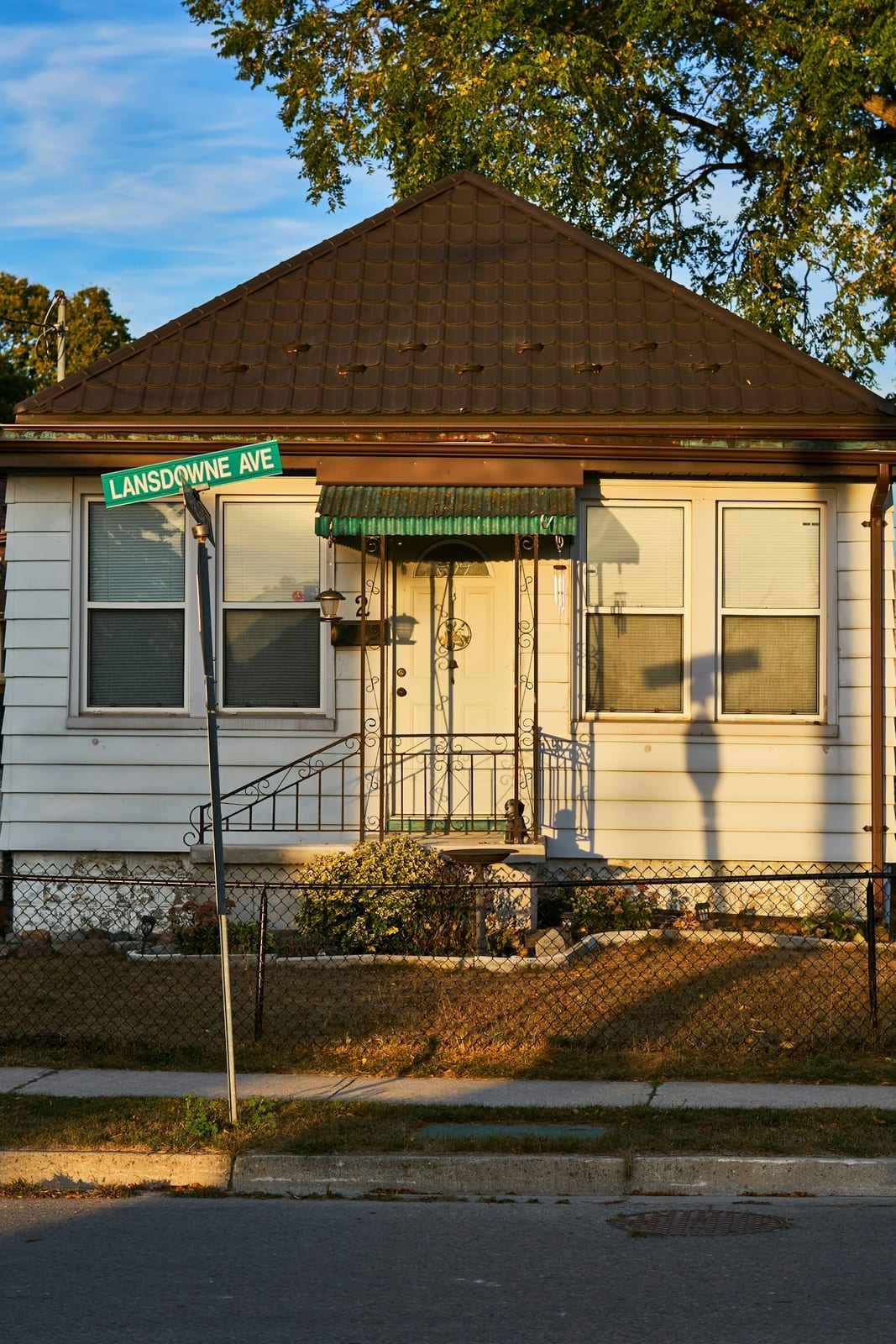
Here is the asymmetry at the heart of real estate SEO. A listing page lives for a few weeks, competes with Zillow and your own MLS syndication, and then dies. A neighborhood page can rank for years, faces weaker competition, and reaches people earlier in the decision.
Almost every agent website is optimized for the first kind and neglects the second.
Why most neighborhood pages fail
Not because the idea is wrong. Because of how they get made.
The typical version is generated: median price pulled from a data feed, a school rating widget, a demographics table, three stock photos, and 200 words that could describe anywhere in the country. Multiply by forty neighborhoods.
Google has seen thousands of these. They are indistinguishable from each other, they contain nothing a data aggregator has not already published, and they rank accordingly. Worse, publishing forty of them at once signals a template farm rather than a local expert.
What actually makes one work
Information that could only come from someone who works there.
What the commute is genuinely like at eight in the morning, not the map estimate. Which streets flood, and which ones people think flood but do not. Where the boundary line actually sits, and which addresses get misfiled by every search portal. What the new development on the east side changes. Why homes on one side of the main road sell for noticeably more.
That is not content marketing. It is the conversation you already have with clients, written down. It is also unrepeatable by a competitor with a template, which is exactly why it holds.
The tell is simple. If a page could be republished for a different neighborhood by find-and-replace, it will not rank.

Three good pages beat forty generated ones
This is the recommendation agents resist most, and it is the one that works.
Pick the three areas where you genuinely have the most knowledge and the most transactions. Write those properly, at length, with photographs you took. Get them ranking. Then add the fourth.
Forty thin pages compete with each other, dilute your site, and take longer to produce than three good ones. Three strong pages establish that the site is worth crawling, and the fourth arrives with more authority behind it than the first did.
What to include, in rough order of value
- Your own commentary on what is happening in the market there, updated quarterly. Dated, so readers know it is current.
- Recent sales you were involved in, with what surprised you about each.
- Your own photographs. Stock imagery of generic suburbs undermines the entire claim to local knowledge.
- Active listings in that area, pulled in dynamically so the page stays alive between edits.
- Practical logistics: commute times you have actually driven, parking rules, trash days, the things residents ask.
Data tables are fine as supporting material. They should not be the page.
The trap with school information
Schools are the most searched aspect of a neighborhood and the most legally fraught thing you can write about. Steering language around schools has a long history of being treated as a proxy for discrimination.
Link to the district and the official ratings. Do not characterize schools as good or bad, and do not use school quality as shorthand for the kind of person who lives somewhere. Give people the source and let them evaluate it.
Common questions
How long should a neighborhood page be?
Long enough to say something specific and no longer. A thousand words of real local knowledge outperforms three thousand words of padding, and padding is obvious to readers before it is obvious to Google.
How often should I update them?
Quarterly for the market commentary, and whenever something material changes. A page whose most recent note is two years old signals an agent who has moved on.
Should the page include active listings?
Yes, pulled in dynamically. It keeps the page useful between manual updates and gives visitors somewhere to go next.
What if I work forty neighborhoods?
You probably do not work forty of them well. Build for the ones where you have real transaction history, and let the rest be covered by your general area page until you have something genuine to say.
Do these pages actually generate leads, or just traffic?
They generate a different kind of lead: earlier, less transactional, and more likely to remember who you are when they are ready. Judge them over a year, not a month.
If your neighborhood pages read like everyone else's
Send us a link to one. We will tell you which parts of it a competitor could copy verbatim, which is the part that is not doing any work.
Building something in the US?
United States — We design and build fast, high-performing websites and AI customer experiences for ambitious US businesses. Conversion-focused, accessible, and engineered for Core Web Vitals — with a fixed quote and senior people on every project.
What we do in the US