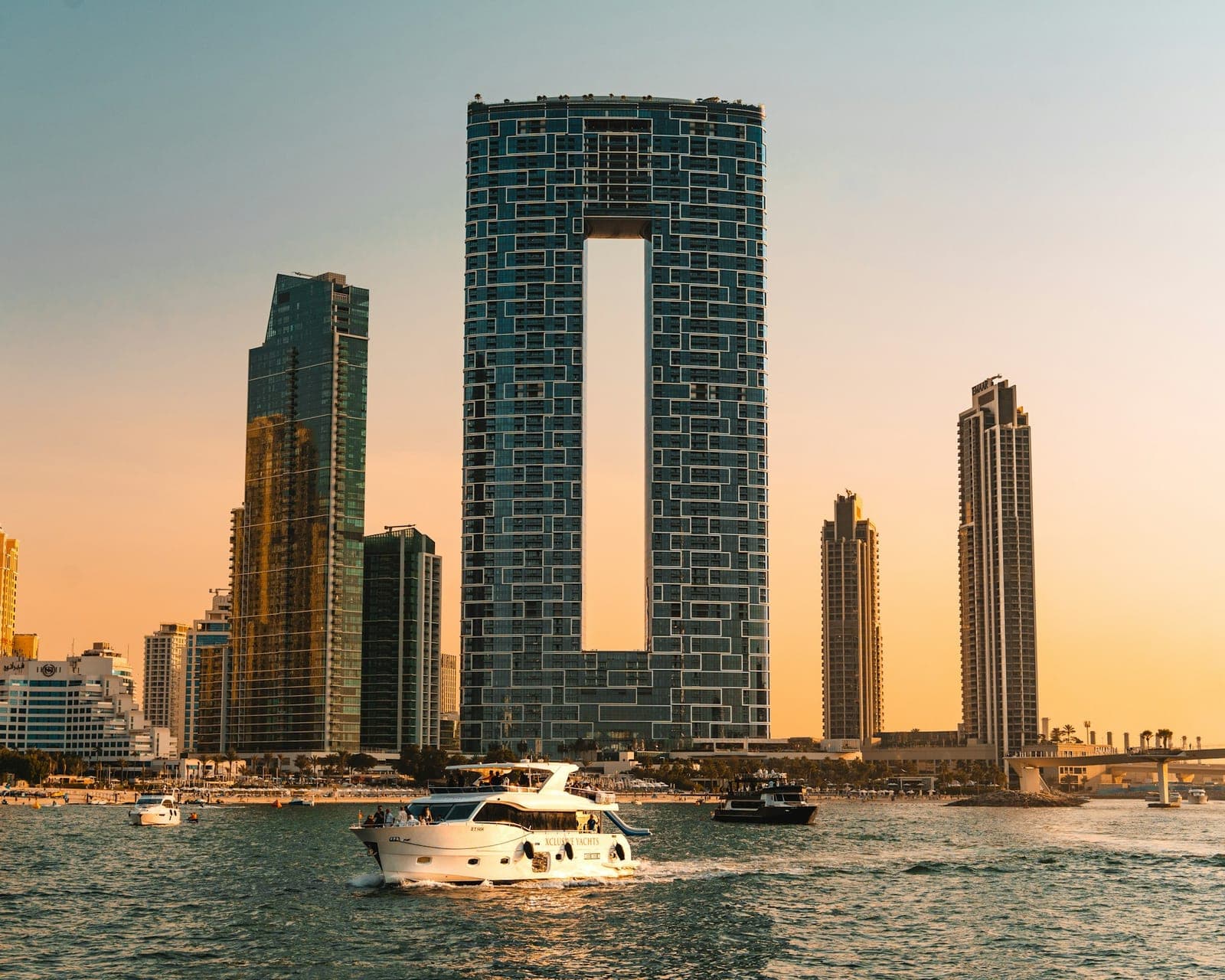
An off-plan buyer is being asked to pay for a home that currently exists as a render and a hole in the ground. The decision is almost entirely about trust, and yet most launch pages spend their effort on the render.
You can see it in the enquiry quality. A page that leads with lifestyle imagery produces browsers. A page that answers the buyer's actual anxieties produces people who book.
The questions behind every off-plan enquiry
Buyers rarely ask these out loud, which is exactly why the page needs to answer them unprompted.
Who is the developer, and what have they finished? Not what they have announced. What has been handed over, when, and roughly on time. A developer with completed projects should be showing them prominently, because it is the single most reassuring thing available.
Where does my money sit? Dubai requires off-plan payments into an escrow account tied to the project. Buyers know this exists. Fewer know how to verify it, and a page that names the escrow arrangement plainly is doing more selling than another render.
What is the payment plan, really? Not "flexible payment plans available". The actual structure: booking amount, construction-linked instalments, what falls due on handover, and what happens if a milestone slips.
When is handover, and what if it moves? Every buyer has heard a delay story. Saying nothing does not stop them thinking about it.
What am I actually buying? Floor plans with real dimensions, the finish specification, what is included and what is not. Kitchen appliances and wardrobes are the most common source of handover disappointment.
Structure beats storytelling here
A launch page is usually built like a brochure: a hero, a lifestyle paragraph, a gallery, an enquiry form. That layout hides everything above inside prose, or leaves it out.
Treat the details as data instead. Payment plan as a table with dates and percentages. Unit types as a filterable list with real sizes and prices. Handover as a date, not a quarter and a shrug. Specification as a list a buyer can scan.
This is not just an honesty exercise. Structured detail is what lets you build the pages that get found. "One bedroom apartments in a named community with a 60/40 payment plan" is a search someone makes. A page built from fields can answer it. A brochure cannot.

The permit still applies
Worth repeating because launch campaigns are where it slips: an off-plan advert is still an advert. It needs a valid Trakheesi permit and the number has to appear on the page. Launch pages often go up in a hurry, get shared widely, and outlive the permit that covered them.
If your launch pages are built separately from your main listing system, they are probably outside whatever publish rules protect the rest of your site. That is worth checking before the next campaign rather than after.
What to put above the fold
Not the render. The render is why they clicked. It is not why they book.
Developer name, community, unit types available with real starting prices, the payment plan headline, and handover date. Then the imagery. A buyer who is serious wants to know within five seconds whether this project is in their range and their timeline, and a page that makes them scroll for it loses them to the next tab.
Common questions
Should we publish prices on an off-plan launch page?
A starting price at minimum. Pages without any figure get more enquiries and far worse ones, because a large share are people the project was never going to suit. Qualifying on the page saves your sales team a week.
How much detail on the payment plan is too much?
There is no such thing here. Buyers are trying to model their own cash flow. Give them percentages and trigger points, and they can. Vagueness reads as something being hidden.
Do we need a separate page per unit type?
Usually yes, once the project is large enough that unit types differ meaningfully in price and layout. Each one can then answer a more specific search, which is where the traffic actually comes from.
What should happen to the page after the project sells out?
Keep it, mark it clearly as sold out, and point to current projects. A completed project page is proof of delivery, which is the thing your next launch needs most.
Is a 3D tour worth the cost for off-plan?
Often, for the larger unit types. It answers the spatial question renders cannot. Just make sure it loads on a phone and is not the reason the page takes eight seconds to appear.
If your launch pages are underperforming
The usual cause is that the page is beautiful and uninformative. Send us a link and we will tell you which of the five questions above your page is failing to answer.
Building something in the UAE?
UAE — We design and build fast, search-ready websites and AI-powered customer experiences for ambitious businesses in Dubai, the wider UAE, and across the Gulf. Fixed quotes, senior people on every project, live in weeks — not months.
What we do in the UAE